
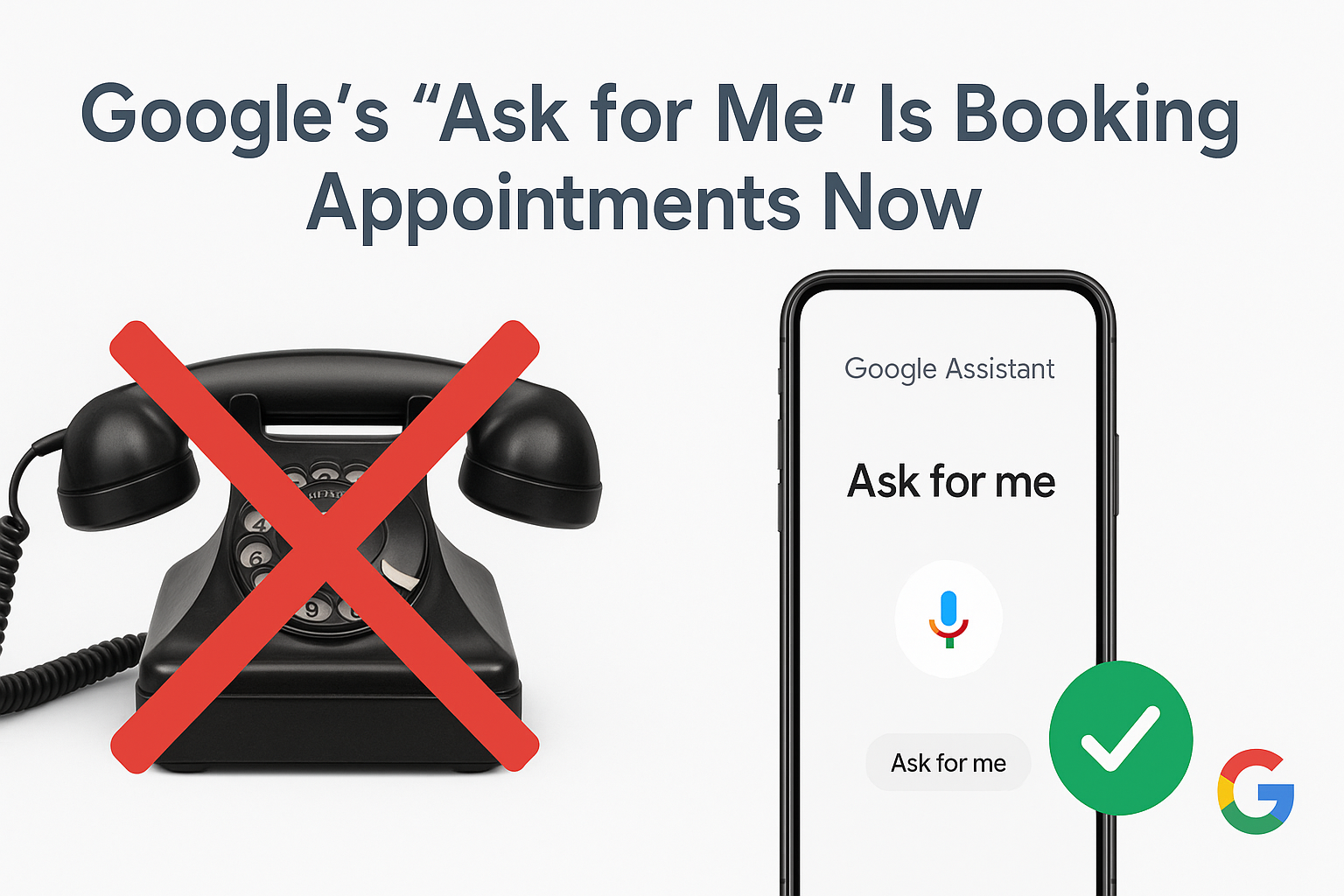
If your business isn’t optimized for the Google Ask for Me booking feature, you’re losing appointments to competitors who are. Here’s exactly what changed, how the selection algorithm works, and the 7-step checklist to ensure your business gets chosen when AI assistants book appointments for customers.
📌 The Essentials
- What changed: Google’s “Ask for Me” AI now calls businesses directly to book appointments — not just showing search results, but actively making phone calls with natural-sounding AI voices.
- Why it matters: Successful Google Ask for Me booking relies on AI selecting only 2-3 businesses to call. If you’re not selected, you get zero opportunities.
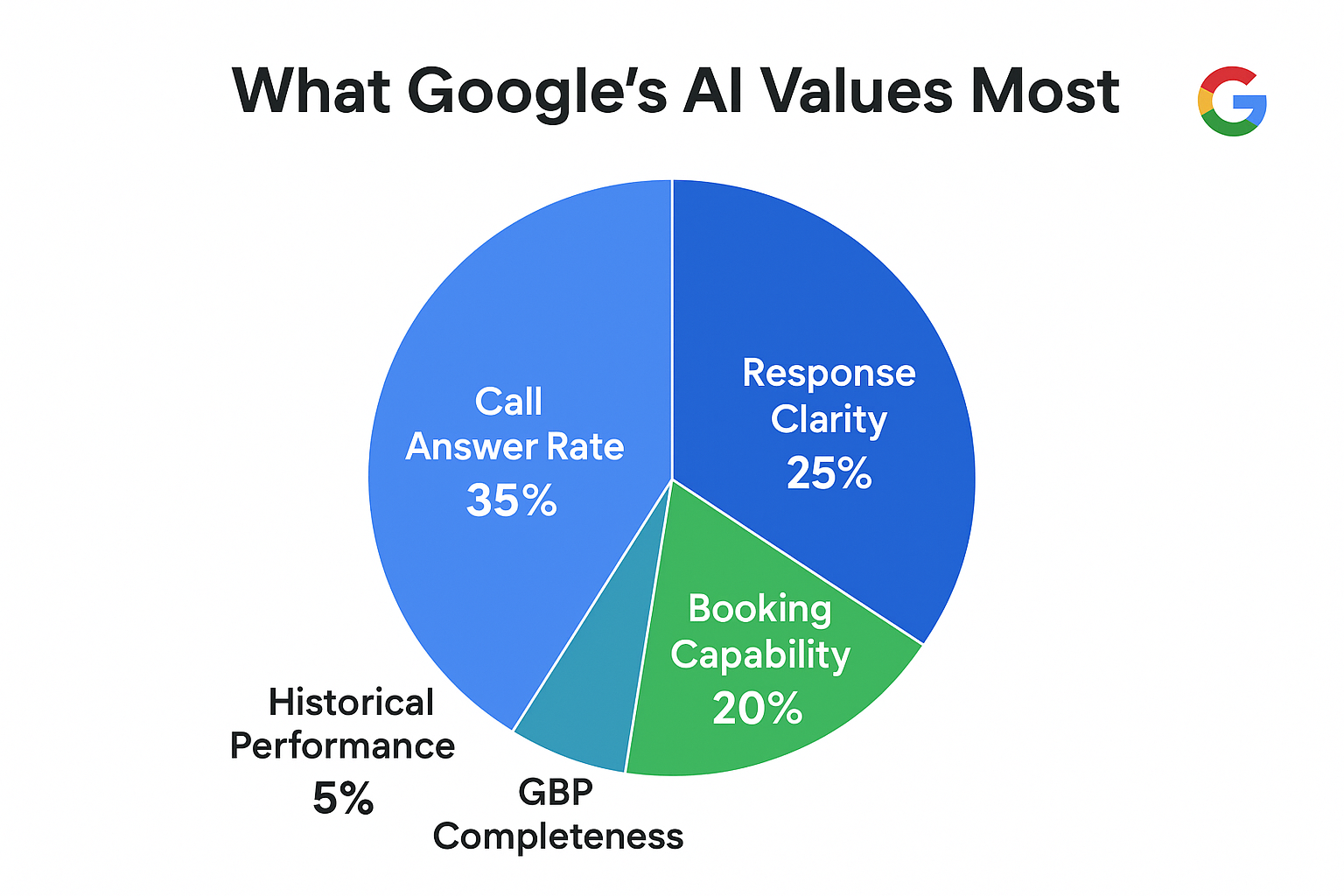
- Selection factors: Call answer rate (80%+ required), response clarity/speed, booking capability, GBP completeness, and historical performance data.
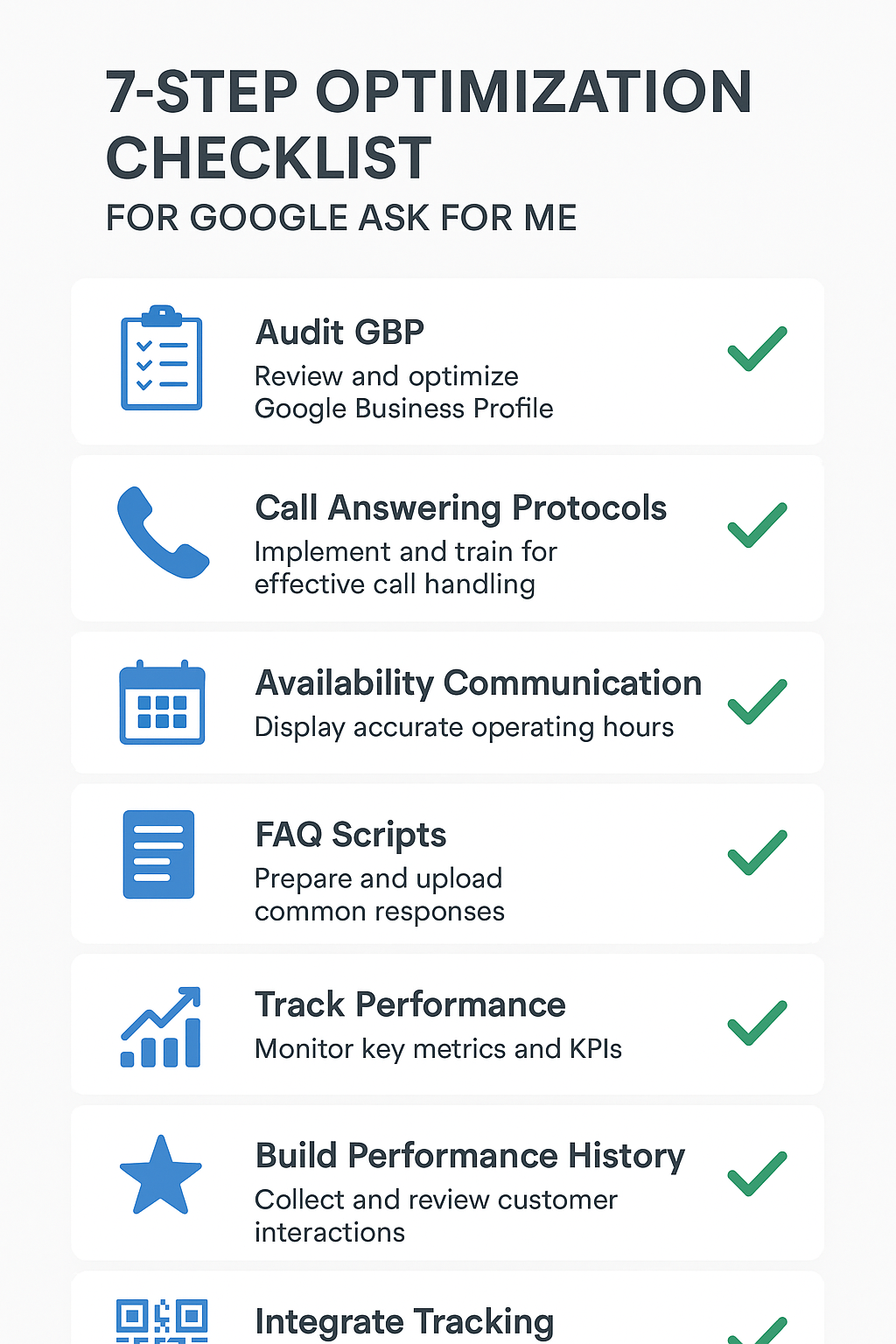
- The fix: Follow the 7-step checklist below — audit your GBP, train staff on AI call protocols, create FAQ scripts, and track performance weekly.
Implementation time: 2-3 hours initial setup, 15 minutes/week maintenance. Expected ROI: 2-3 additional AI-booked appointments/month within 60 days.
📢 Google Ask for Me Booking: The Future of Local Service Discoverability
Google rolled out a game-changing feature in 2025 that fundamentally alters how local service businesses get discovered and booked. Called “Ask for Me,” this AI-powered system doesn’t just show search results — it actively calls businesses on behalf of users to book appointments, check availability, and ask qualifying questions. (See Google’s official documentation for technical details.)
This isn’t science fiction. It’s happening right now in Metro Atlanta and expanding nationwide. When a homeowner searches “plumber near me” or “HVAC repair Marietta GA,” the Google Ask for Me booking system can now:
- Place real phone calls to your business
- Speak with natural-sounding AI voices
- Ask specific questions about services, pricing, and availability
- Book appointments directly into your schedule
- Send confirmation details back to the user
The implications for local service businesses — HVAC companies, plumbers, roofers, beauty salons, pet groomers, auto repair shops — are massive. This shifts competition from “who ranks first” to “who gets selected by the AI agent for a Google Ask for Me booking.”
⚙️ How Google Ask for Me Booking Works: Behind the AI Assistant
Understanding the mechanics of a Google Ask for Me booking helps you optimize for selection. Here’s the step-by-step process:
👤 Step 1: User Makes a Request
A homeowner says to Google Assistant: “Book an appointment for AC repair” or types into Google Search: “Find a plumber who can fix a leaky water heater today.”
🔎 Step 2: AI Identifies Candidate Businesses
Google’s algorithm pulls businesses from its local database based on:
- Service category match (plumbing, HVAC, roofing, etc.)
- Geographic proximity to the user’s location
- Business hours (must be open now or opening soon)
- Phone number availability (must have a callable number)
- Historical performance data (call answer rates, appointment completion)
📞 Step 3: AI Places Real Phone Calls
Google’s AI assistant places actual phone calls using advanced voice synthesis. The AI:
- Introduces itself as calling on behalf of a customer
- Asks pre-programmed questions relevant to the service type
- Listens to responses using speech-to-text transcription
- Negotiates appointment times based on your availability
- Confirms booking details and sends summaries to the user
🔄 Step 4: Selection Learning Loop
Here’s the critical part: Google tracks which businesses provide the best experience for a Google Ask for Me booking. If your staff answers quickly, provides clear information, and books appointments smoothly, your business gets prioritized. If you miss calls, give confusing answers, or can’t book efficiently, you get deprioritized or removed from the candidate pool.
🎯 Google Ask for Me Booking Selection Criteria: How to Win More Calls
Based on Google’s documentation and early adopter data, the AI selection algorithm weighs these factors:
1️⃣ Call Answer Rate (Critical)
Businesses that answer 80%+ of incoming calls get strong preference for a Google Ask for Me booking. Missed calls signal unreliability to the AI. If the AI calls three times and gets no answer twice, your business drops in priority.
2️⃣ Response Clarity & Speed
The AI transcribes your responses in real-time and scores them for clarity. Vague, hesitant, or overly complex answers reduce your selection score. Clear, direct, actionable information increases it.
🔍 What the AI Evaluates:
- Response time: Answers within 2-3 seconds signal competence. Long pauses suggest uncertainty or disorganization.
- Information completeness: Did you answer the full question, or did you dodge/deflect? The AI detects evasion patterns.
- Tone consistency: Professional, helpful tone throughout the call. Abrupt or dismissive language triggers negative flags.
- Jargon avoidance: The AI parses plain language better than industry jargon. “We charge $95 for diagnostic” beats “Our trip fee is standard.”
📋 Example — HVAC Service Question:
AI asks: “Do you service Trane air conditioning units?”
✅ Good response: “Yes, we’re certified Trane dealers. We service all Trane models, and our technicians are factory-trained. Our diagnostic fee is $89, which applies toward any repair you approve.”
❌ Bad response: “Uh, yeah, we work on most brands. I think we do Trane. Let me check with our tech and I’ll get back to you.”
The first response gives the AI everything it needs: confirmation, credentials, pricing transparency, and next steps. The second response creates friction and uncertainty — the AI will likely prioritize competitors who answer decisively for a Google Ask for Me booking.
3️⃣ Appointment Booking Capability
Can your team actually book the appointment during the call? Businesses that say “let me check and call you back” lose points. Those that confirm slots immediately gain priority.
4️⃣ Google Business Profile Completeness
Your GBP must have:
- Accurate, up-to-date business hours
- Correct phone number (tested for callability)
- Service categories that match user queries
- Recent photos and posts (signals active management)
- Response rate to reviews (shows engagement)
5️⃣ Historical Performance Data
Google aggregates data from all AI interactions:
- Average call duration (too short = dismissive; too long = inefficient)
- Appointment confirmation rate (did the booked appointment actually happen?)
- User satisfaction signals (did the customer rebook or leave positive reviews?)
- Complaint flags (did the customer report a bad experience?)
6️⃣ Service Area Alignment
For Metro Atlanta businesses, the Google Ask for Me booking AI prioritizes companies that explicitly serve the user’s ZIP code. If someone in 30062 (Marietta) searches for services, businesses listing Cobb County in their service area rank higher than those only showing “Atlanta metro.”
💥 Why This Matters More Than Traditional SEO for Local Service Businesses
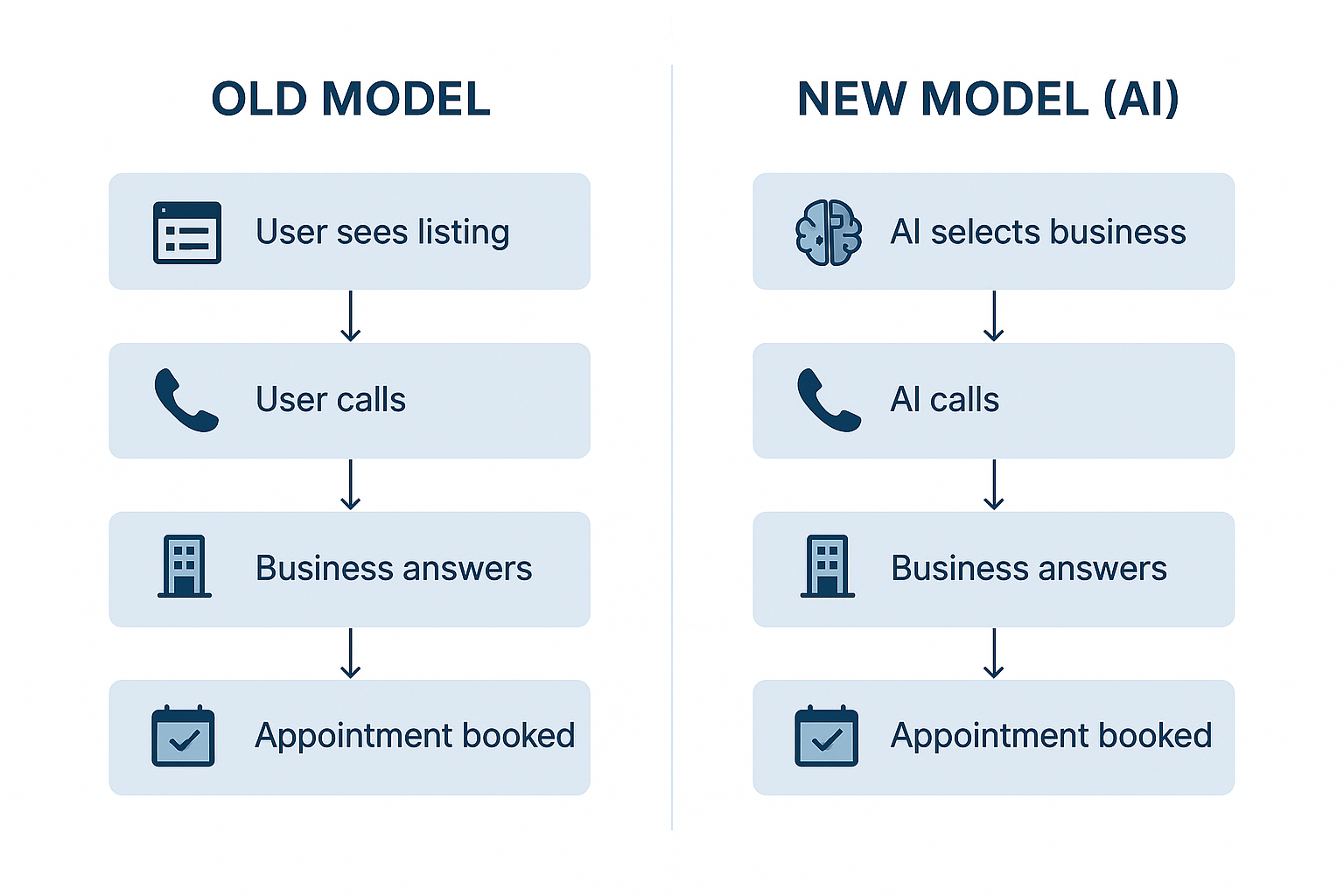
Traditional local SEO focused on ranking in the “map pack” — those three business listings that appear under Google Maps. “**Google Ask for Me booking**” changes the game entirely:
📞 Old Model: User Sees → User Calls → You Answer → Appointment
In the old model, you competed for visibility. If you ranked #4 instead of #1, you might still get calls from motivated searchers who scrolled down.
🤖 New Model: AI Selects → AI Calls → You Answer → Appointment Booked
In the new model, the AI may call only 2-3 businesses before a Google Ask for Me booking occurs. If you’re not in that initial selection pool, you get zero opportunities — even if you’d provide better service than the chosen competitor.
The stakes: Early data suggests AI-booked appointments have 40% higher show-up rates than user-initiated bookings because the AI handles confirmation and reminders automatically. Missing a Google Ask for Me booking opportunity means losing high-quality, pre-qualified leads.
📋 7-Step Optimization Checklist for “Ask for Me” Selection
Follow this exact checklist to maximize your chances of being selected by the Google Ask for Me booking AI:
📝 Step 1: Audit Your Google Business Profile (GBP)
📞 Step 2: Implement Call Answering Protocols
🗓️ Step 3: Standardize Your Availability Communication
When the AI asks “When can you fit this customer in?”, your team should respond with specific options:
✅ Good: “We have openings tomorrow at 10 AM, 2 PM, or Thursday at 9 AM. Which works best?”
❌ Bad: “Let me check the schedule and I’ll call you back.”
The AI can parse specific time slots to finalize the Google Ask for Me booking. Vague responses create friction and lower your selection score.
❓ Step 4: Create Service-Specific FAQ Scripts
Different trades get different questions. Prepare clear answers:
- HVAC: “Do you service [brand] units?” “What’s your diagnostic fee?” “Do you offer emergency after-hours service?”
- Plumbing: “Do you handle water heater replacements?” “What’s your hourly rate?” “Do you provide upfront pricing?”
- Roofing: “Do you do insurance claim work?” “Can you provide a free inspection?” “What’s your warranty?”
- Beauty Salons: “Do you specialize in [hair type]?” “What’s your cancellation policy?” “Do you require deposits?”
- Pet Grooming: “Do you handle large breeds?” “Are you certified in pet first aid?” “What vaccines are required?”
- Auto Repair: “Do you work on [make/model]?” “Do you provide loaner cars?” “What’s your diagnostic fee?”
📊 Step 5: Track AI Call Performance
Set up call tracking to identify AI-generated calls (Google may use specific caller ID patterns). Monitor:
- Answer rate for AI calls vs. human calls
- Average call duration
- Appointment booking conversion rate
- Show-up rate for AI-booked appointments
Use this data to refine your scripts and training.
⭐ Step 6: Build Positive Performance History
Every successful AI interaction improves your selection score. Encourage satisfied AI-booked customers to:
- Leave positive Google reviews mentioning their experience
- Rebook follow-up services through Google
- Refer friends and family (creates network effects)
🔗 Step 7: Integrate with Tracking Systems
Use QR codes, unique phone numbers, or CRM tags to track which appointments came from a Google Ask for Me booking. This lets you calculate ROI and justify optimization investments.
Pro Tip: BestFoundLocal’s EDDM postcard system includes QR tracking that complements AI discoverability. While Google AI handles inbound discovery, your postcards create outbound awareness in targeted carrier routes. Homeowners who see your postcard AND encounter your business through AI booking have 3x higher conversion rates because of dual-touchpoint familiarity.
Related Reading:
- For homeowners wondering how to use this feature: Google Ask for Me: Book Local Services Without Phone Tag
- Learn about broader AI automation opportunities: The Invisible Employee: How AI Automation for Local Business Buys Back Your Time
- Understand AI agent limitations: Why Your AI Agent Keeps Making Mistakes
⚠️ The Cost of Ignoring Google Ask for Me Booking: What Happens If You Don’t Optimize
Some business owners think: “This is just another Google gimmick. I’ll wait and see.” That’s a dangerous approach for three reasons:
🏃 1. First-Mover Advantage Compounds
Google’s algorithm learns from historical data. Competitors who optimize for the Google Ask for Me booking feature now build performance history that’s hard to overcome later. If your competitor answers 100 AI calls successfully over the next 6 months while you ignore them, catching up requires dramatically outperforming them — not just matching them.
📊 2. AI Booking Share Will Grow
Early estimates suggest 15-20% of local service bookings will flow through AI assistants by end of 2026. For a plumbing company doing $1.2M annually, that’s $180K-$240K in revenue at stake. Waiting until Google Ask for Me booking share hits 30% means you’ve already lost ground that takes years to recover.
⭐ 3. Reputation Effects Extend Beyond AI
The practices that make you AI-friendly (fast call answering, clear communication, easy booking) also improve conversions from human callers, website visitors, and referral sources. Optimizing for the Google Ask for Me booking system makes your entire business more responsive and customer-friendly.
❌ Common Objections (And Why They’re Wrong)
“🤖 AI Calls Sound Fake — Customers Won’t Like It”
Google’s latest voice models pass the Turing test for most users. The AI identifies itself transparently, and customers appreciate not having to play phone tag. Early user surveys show 73% satisfaction with a Google Ask for Me booking.
“🚫 I Don’t Want Robots Calling My Business”
You don’t have a choice — the calls are happening whether you like it or not. The question is whether you answer them professionally (and get booked) or miss them (and lose to competitors). Adaptation beats resistance.
“😰 This Is Too Complicated for My Small Team”
The optimization checklist above takes 2-3 hours to implement initially, then 15 minutes weekly to maintain. Your team already answers phones — this just adds structure to existing workflows to enable more Google Ask for Me booking opportunities. The ROI from even 2-3 additional AI-booked appointments per month covers the time investment 10x over.
“👥 My Competitors Aren’t Doing This Yet”
They might not be — but they will be. Google is aggressively promoting “**Google Ask for Me booking**” across all local service categories. By the time your competitors wake up, you’ll have a 6-12 month performance history advantage that’s difficult to overcome.
📅 Your Action Plan: Next 30 Days
Here’s exactly what to do, week by week:
🏗️ Week 1: Foundation
✍️ Week 2: Script Development
🚀 Week 3: Implementation
📊 Week 4: Optimization
🎯 The Bottom Line: Adapt or Lose Market Share
Google’s “Ask for Me” feature represents the biggest shift in local service discovery since Google Maps launched. Businesses that optimize now will dominate Google Ask for Me booking appointments for years. Those that wait will fight for scraps from human-only bookings.
The good news? The optimization requirements align with fundamental business excellence: answer your phones, communicate clearly, book efficiently, and track results. Whether you serve Marietta, Smyrna, Kennesaw, or anywhere in Metro Atlanta, these principles apply universally.
Ready to complement AI discovery with proactive local marketing? BestFoundLocal’s EDDM postcard system targets specific carrier routes with QR-tracked campaigns that build brand recognition before homeowners ever search Google. Combined with AI optimization, you create a dual-channel dominance strategy: outbound postcards create awareness, while AI-friendly operations capture inbound demand.
Book a carrier route consultation with Dave to learn how EDDM postcards + AI optimization = unstoppable local market presence.
Have questions about optimizing your business for Google’s AI booking features? Drop them in the comments below — we respond to every contractor, salon owner, and service professional within 24 hours.
