
If you run a residential trade company in Metro Atlanta—whether you are dispatching service vans across East Cobb, repairing heat pumps in Roswell, or replacing roofs in Kennesaw—you already know local competition is fierce. But market research reveals an uncomfortable truth for local trade businesses: Atlanta contractors are flying blind against their competitors’ active promotional offers and need proven contractor marketing strategies to win high-ticket jobs.
📌 The Essentials
- The Blind Spot: Over 80% of North Atlanta home service trade businesses operate with zero structured intelligence on rival discounts, mailers, or digital promotions.
- Competitive Intensity: Tracking ad volume alone fails; trade leaders measure multi-channel saturation, geographic route depth, and aggressive loss-leader structures.
- Strategic Counter-Positioning: Instead of competing in margin-killing price wars, top contractors win high-ticket jobs by bundling high-trust guarantees with exclusive direct mail.
- Territory Exclusivity: Category-exclusive platforms lock out competitors across 15 target Metro Atlanta ZIP codes and 477 high-income carrier routes.
Implementation takeaway: Audit rival promotional cadence quarterly to protect your gross margins and capture premier residential service agreements across North Atlanta.
You see wrapped box trucks from rival companies rolling along Canton Road, Highway 92, and Johnson Ferry Road every morning. But what specific discounts are pulling homeowners out of your sales pipeline today? What loss-leader pricing are regional outfits pushing on digital circulars? Which direct mail networks are flooding your target subdivisions with coupon inserts this week? Most trade owners have no reliable way to track rival offers until call volume drops and dispatch boards sit empty. That is why data-driven contractor marketing strategies, disciplined local marketing strategy execution, and real-time competitor tracking are vital for modern service leaders.
The Blind Spot in Contractor Marketing Strategies Costing Trades High-Ticket Jobs
For decades, traditional trade marketing relied on guesswork and generic seasonal promotions. Business owners sat down each spring or autumn, chose a standard hook like “$50 Off Any Service Call” or “Free Diagnostic with System Replacement,” mailed out postcards or bid on pay-per-click search ads, and hoped the phone would ring.
However, modern market analysis shows that promotional dynamics across North Georgia have shifted dramatically. While independent operators run static advertisements, multi-truck operations and private equity-backed home service companies deploy sophisticated multi-channel campaigns engineered to dominate key service sectors. In high-density suburban corridors like East Cobb, Sandy Springs, Alpharetta, and Woodstock, multiple competing trade businesses frequently launch coordinated campaigns simultaneously:
- Plumbing Disruption: A regional plumbing contractor floods postal carrier routes with a $29 water heater flush paired with a comprehensive 50-point whole-home inspection. This loss-leader offer is designed specifically to identify aging cast iron pipes, failing pressure reducing valves, and repiping opportunities.
- HVAC Equipment Bundling: An aggressive heating and air conditioning outfit saturates Cobb and Cherokee counties with a free smart thermostat and 10-year parts warranty bundled into every seasonal system replacement.
- Roofing Storm Guarantees: A regional exterior contractor delivers oversized flyers to 10,000 households across premier neighborhoods, offering zero-down deductible assistance and complimentary drone attic inspections following spring thunderstorms.
- Electrical Panel Upgrades: A licensed electrical service firm targets aging homes built before 1995 with a $250 instant rebate on 200-amp service panel upgrades and EV charger installations.

When an East Cobb or Roswell homeowner opens their physical mailbox or searches online for repairs, a generic “$50 off” postcard gets immediately overshadowed by a high-value, problem-specific offer. Your firm did not lose that high-ticket installation because your technicians have inferior craftsmanship; you lost because your competitor executed aggressive multi-channel campaigns before your team even knew the homeowner was shopping.
Inside the Competitive Intelligence Engine: Tracking Real Local Market Data
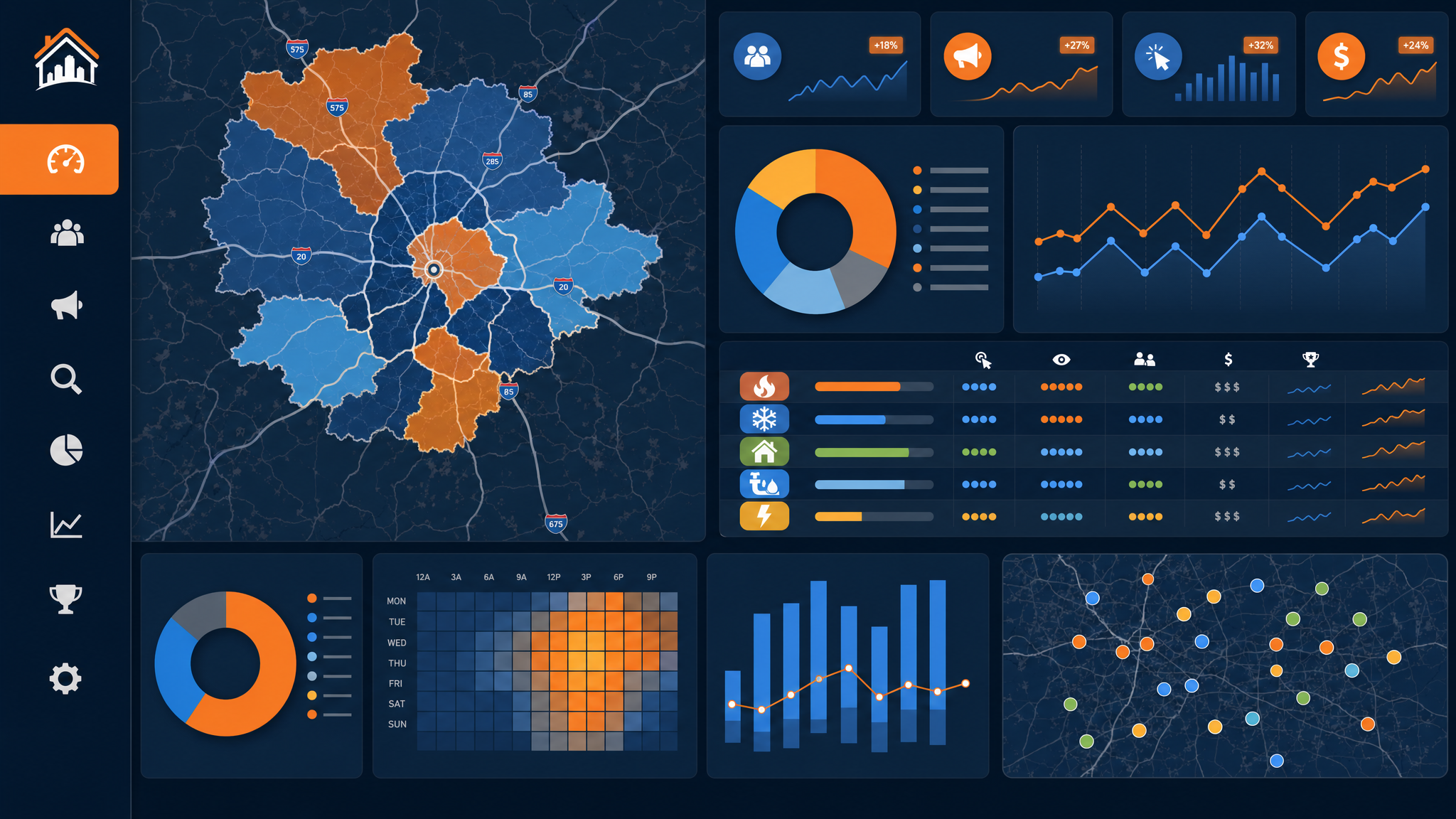
To eliminate this costly blind spot, BestFoundLocal developed an automated competitive intelligence engine engineered specifically for residential trade specialists across Metro Atlanta. We monitor, aggregate, and analyze commercial promotional activity across multiple marketing channels throughout North Georgia—tracking digital deal platforms, direct mail circulars, social promotions, and neighborhood print inserts continuously.
Instead of relying on rumors, word-of-mouth chatter, or stumbling across a rival’s flyer left on a homeowner’s kitchen counter, our platform maps out the exact deals, price points, and service guarantees active in your specific carrier routes right now. According to research from the U.S. Census Bureau Economic Census and regional construction trade data, Metro Atlanta remains one of the fastest-growing and most competitive home remodeling and trade service markets in the United States.
For independent local trades striving to scale sustainably, executing data-driven contractor marketing strategies with structured market visibility turns commercial advertising from a reactive expense into a predictable revenue driver. When you know precisely what competitors are testing in your territory, you can adjust your messaging, train your CSRs, and craft counter-offers before market share slips away.
Understanding “Competitive Intensity” in Plain English
Tracking raw advertising frequency is only the first step. The true competitive breakthrough comes from calculating and analyzing Competitive Intensity across your core operational routes.
In plain English, competitive intensity measures not merely who is running advertisements, but how deeply, aggressively, and consistently they are saturating your target neighborhoods. Our analysis evaluates three primary dimensions of local market saturation:
- Multi-Channel Saturation: Is a rival company running an isolated one-off print ad, or are they synchronized across high-volume direct mail drops, localized digital landing pages, search engine placements, and automated customer follow-ups? Multi-channel saturation signals a well-capitalized acquisition campaign that will capture top-of-mind awareness quickly unless countered.
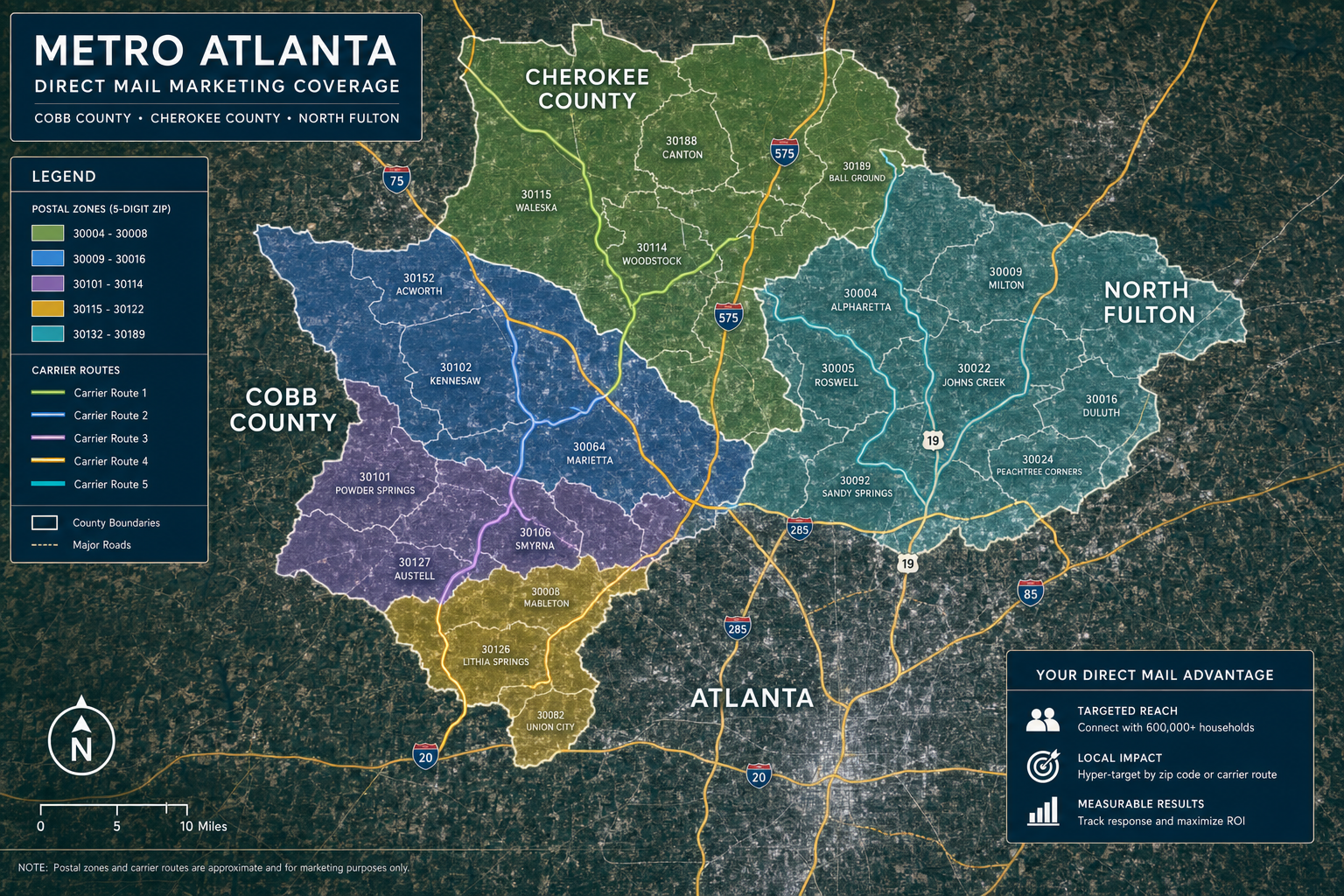
- Geographic Breadth and Route Density: Are competitors testing single neighborhoods, or have they established continuous route coverage across Marietta, Woodstock, Roswell, Alpharetta, Kennesaw, and Smyrna? Dense route concentration allows rival crews to lower travel overhead, schedule faster appointments, and squeeze smaller operators out of entire ZIP codes.
- Offer Aggressiveness and Margin Structure: Are rival companies promoting basic brand awareness, or are they deploying aggressive loss-leaders specifically engineered to lock homeowners into high-retention annual maintenance agreements and profitable system replacements?
When you evaluate the competitive intensity score of rival companies in your territory, you no longer have to guess what advertising budget or promotional structure is required to win. You understand your competitors’ operational playbook before their technician ever knocks on your customer’s door, allowing you to deploy targeted contractor marketing strategies that protect your territory and maintain premium pricing.
From Pure Data to a Dominant, Category-Winning Offer
Collecting data without executing an effective strategy is meaningless. The ultimate objective of competitive intelligence is to craft a commercial offer that positions your trade business as the premier, trusted authority in your community.
When competitive monitoring shows that three rival plumbers are all discounting standard drain cleanouts to $49, entering a race to the bottom will only destroy your profit margins. Instead, you counter-position. You introduce an ironclad “On-Time Arrival or We Pay You $50” guarantee, a complimentary whole-house water hardness analysis, or a VIP club membership that provides genuine lifetime value. By changing the criteria upon which homeowners make their decision, you render your competitors’ shallow discounts obsolete.
This evidence-based approach is vital for companies serving premier residential enclaves like Walton, Pope, Lassiter, and Wheeler high school districts in East Cobb. Homeowners in these communities prioritize responsiveness, technician background checks, and verified craftsmanship over bargain-basement pricing. For trade owners who are already navigating Georgia business challenges, wage inflation, and technician shortages, maximizing return on advertising spend through tested contractor marketing strategies is non-negotiable.

Lock Down Your Exclusive Trade Category on BestFoundLocal
BestFoundLocal translates competitive intelligence into tangible, exclusive customer acquisition through our premium 16-slot Every Door Direct Mail (EDDM) postcard platform. We deliver oversized, high-impact direct mail cards into thousands of verified homeowner mailboxes across 15 high-income Metro Atlanta ZIP codes and 477 carrier routes.
Here is what makes our approach uniquely powerful: every trade category is 100% exclusive per postcard drop. Only one HVAC provider, one licensed residential plumber, one certified roofing contractor, and one master electrician is featured per route campaign. Once a qualified contractor secures their trade slot in a specific territory, competing businesses are locked out for that drop. Combining print mail with modern digital tools like AI automation for local business ensures that incoming calls and inquiries are captured instantly without phone tag.
According to the U.S. Small Business Administration marketing guidelines, targeted direct mail combined with digital multi-channel follow-up produces significantly higher response rates than uncoordinated single-channel advertising. Do not wait until you find a competitor’s glossy postcard in your own mailbox to take action.
Frequently Asked Questions: Proven Contractor Marketing Strategies & Competitor Tracking
How do modern contractor marketing strategies track local competitor promotions effectively?
Contractors track competitors by monitoring local direct mail circulars, coupon publications, local search engine rankings, social media advertising libraries, and community deal sites. BestFoundLocal automates this entire process by continuously scanning promotional activity across Metro Atlanta carrier routes.
What is competitive intensity in local trade marketing?
Competitive intensity measures how aggressively rival businesses are competing for market share. It evaluates multi-channel presence (print, digital, social), geographic concentration across specific ZIP codes, and the depth of promotional discounts or loss-leader offers.
Should home service marketing focus on matching competitor discounts?
Rarely. Price matching often triggers a margin-killing race to the bottom. Superior contractor marketing strategies focus on counter-positioning: offering higher-value guarantees, premium equipment warranties, faster response times, or bundled maintenance packages that make standard discounts look inferior.
Why is carrier route targeting superior to broad ZIP code advertising?
Targeting specific postal carrier routes allows trade contractors to concentrate marketing dollars in high-income neighborhoods with older homes that require immediate repairs, renovations, and equipment replacements, rather than wasting budget on apartment complexes or non-homeowner areas.
How does category exclusivity work with BestFoundLocal direct mail drops?
Each 16-slot EDDM postcard drop includes only one contractor per trade category (e.g., one plumber, one HVAC specialist, one roofer). This eliminates internal competition on the mailer and guarantees that your business receives 100% of the homeowner attention for your specialty.
👉 Ready to uncover competitive activity in your territory? Explore BestFoundLocal business spotlights today to review active promotions across your target ZIP codes and secure your category-exclusive contractor slot before your rival claims it.
